Sunday, December 15, 2013

Fruitvale Station Review

Written and Directed by Ryan Coogler

Fruitvale Station, which is based on a true story, does not tell the story of an even in the way one would expect. There is a major event that occurs towards the end of the film that was noteworthy, but that is not the true focus of the film. This is a film about a man named Oscar Grant. It follows his life over the course of a very eventful New Years Eve and details who he is and what has led him to his current point in life.

If this seems a bit like a meandering plot that's because it is. It is not a very focused film. Rather, this film functions as a way of introducing you to a character. Some moments in the movie seem rather unnecessary, but they all have an impact. Part of this credit goes to Ryan Coogler's direction, but most of it has to go to Michael B. Jordan's performance. Jordan fully fleshes Oscar Grant out in a way that is rarely seen. It doesn't take long to see who this person is, what his strengths are and what his flaws are, as Jordan knows the character so well and knows how to bring all of these aspects out in a subtle and realistic way.

The rest of the cast is strong, too. Octavia Spencer makes the most of a few scenes as Grant's mom. Her turn is the showiest and most emotional, but Spencer has already shown her strength with that and doesn't disappoint here. The true MVP of the film, aside from Jordan, of course, is Melonie Diaz, playing Grant's girlfriend, Sophina. She too takes what is often a one-note love interest role and fully humanizes her. Sophina is neither a passive sex-object nor a shrill whiner. Instead she is a person who has had her own desires, her own strengths and weaknesses and who behaves realistically in regards to the events unfolding around her.

Perhaps Fruitvale Station is more of an important film than a great one. Like I said, outside of the performances Fruitvale can be a bit meandering and perhaps tries too hard to make its main character undoubtedly likable, but those are small criticisms when a film has as strong an impact on you as Fruitvale Station almost certainly will. I simply was too affected by it to say anything other than that it achieved what it set out to, and that it is a film that many more people should watch, and that should be talked about. A-

Wednesday, December 4, 2013

The Hunger Games: Catching Fire Review

Directed by Francis Lawrence
Written by Simon Beaufoy and Michael DeBruyn
Based on the novel by Suzanne Collins

There's always one question to ask when a sequel to a high profile film is released: How does it compare to the original. In the case of Catching Fire, it proves to be a rare case where the sequel is actually stronger than the original. The credit for this goes to director Francis Lawrence, who shows a surer hand and a better feel for pacing than Gary Ross did. Unfortunately, this film went in with issues from the book that it simply was unable to correct, and which hold the film back. 

The first two acts of the film are incredibly strong. Where the first film kept the focus squarely on the games, this film is at its best when depicting the political unrest that permeates the world. The tone of the film is perfect in these parts, and Francis Lawrence keeps the tension up, as we realize that the world is a powder keg ready to go off. This is aided greatly by the film's gorgeous cinematography, miles better than the shaky-cam plague that the first film had.

The performances are better for the most part as well. Unfortunately Katniss is a less dynamic character this time around, which is a shame as it doesn't allow Jennifer Lawrence much room to really show her talents. She is still a great actress, though, and performs very strongly in the film, making the most of whatever she is given. What's truly been improved this time out is the supporting cast. Harrelson and Banks are markedly improved this time around, as is Hutcherson, who proves to be the heart of the film. Donald Sutherland and Philip Seymour Hoffman are perfectly intimidating villains, and truly help keep the stakes high on the film. Even the past victors are strong, at least those who are given characterization. Sam Claflin may seem like a piece of art direction rather than casting at first glance, but when given a chance to portray more of Finnick's subtextual personality he lives up to the challenge, but in the end it is Jena Malone who truly steals the movie. She doesn't have a ton of screen time, but she makes the most of every second, truly having fun with the role and developing her character well.

In the end, the film falls short when getting to the climax. Though I relished the opportunity for Francis Lawrence to improve upon the missed opportunity that the first film's games were, the emphasis on environmental factors over personal combat lessened the tension of the film, as well as the fact that going back to the games inevitably feels redundant. Another major issue is the PG-13ification of the story. I understood that they had to play it very safe in the first film, as it was children who were being killed, but this time the targets are older, and I can't help but feel like they could have gotten away with more. It's just tough to really feel the stakes of a fight to the death if all of the deaths happen conveniently offscreen.

In the end, this is a strong film that unfortunately had some issues going into it that couldn't have been fixed, not the least of which being its weak ending. However, as a part 2, this film could have been a lot worse, and indeed does improve the story and deliver some great tension, now if only they can continue the upward streak for the two parts of Mockingjay (The two parter being a terrible idea) then they may be able to make something truly great. B+

Monday, December 2, 2013

Only God Forgives Review

Written and Directed by Nicolas Winding Refn

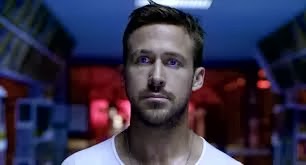
Drive, Nicolas Winding Refn's previous directorial effort, was my favorite film of 2011, so I was understandably intrigued to see Only God Forgives, which looked like an altogether artsier, more unique film. I was excited by the prospect of a filmmaker who would stick so close to his vision and I wanted to see what he would do and was willing to take risks for the sake of his art. What I came to realize in watching Only God Forgives was that it is in the nature of risks that sometimes they don't pay off.

One cannot criticize this film for a lack of passion. Winding Refn clearly cares a lot about the world he is creating. The film is the farthest thing from lazy, closer to having too much effort put in. While that doesn't seem like it can be a bad thing, it really does constrict the film and prevent it from being able to breathe. Refn's style fills every frame, every cut, every moment, but it's too much, it sinks the film, and doesn't really let the film flow naturally. It is loved, but it is forced.

That is not to say it is all bad, though. Truly the cinematography is quite gorgeous, the film feeling like a fever dream at times. This is fascinating enough, but it makes it very hard to have a stake in the proceedings. Artsiness and experimental methods are fine in a film, but when the film becomes about the artsiness and uniqueness, then it ceases to truly function as a movie, and instead becomes an hour and a half of self-indulgence.

Many people in negative reviews have pointed out the fact that Gosling's protagonist has fewer than 20 lines in the film. In truth, this is not a negative at all. Gosling is such a strong actor that he sells these quiet moments, proving that he really doesn't need dialogue, when in fact his dialogue scenes fall shorter than his silent ones. 

The rest of the performances are non-entities. Since this film is so completely about Refn's style, only Gosling and Kristen Scott-Thomas, playing his mother, actually stand out as even having performances. This is a benefit in Gosling's case, and a detriment in Thomas'. She is given the lion's share of the dialogue, and most of it terrible. Her one character trait is that she is a bad mother, and the movie does everything it can to force you to realize this. It is unfortunate, but becomes laughable at a point, as the movie keeps trying to convince you of something you figured out in mere moments.

I do understand what the movie was trying to achieve, and I respect it. There are some truly powerful images and strong scenes. However, the film gets too caught up in itself to really capitalize on these scenes. Though there is a message, one would be forgiven to see it as simply an experimental film, an exercise in seeing how much dark, disturbing content can be squeezed into such a short running time. 

This film is so unique that I would not fault anybody for liking it. Though I found it to be trying too hard, I am nonetheless still interested in Winding Refn's future work, as I truly do respect directors who will stick to their visions and refuse to play it safe, even if that means occasionally making a bad film. 

Grade: C-

Wednesday, November 27, 2013

Boardwalk Empire Season 4 review

Creator and Showrunner: Terrence Winter
(Spoilers for seasons 1-3 below)

In its fourth season, Boardwalk Empire changed up its formula, to some degrees for the better, and to some for the worse. This has been a show that has dealt with some very slow mid-sections, but always managed to make up for it by bringing things together for an exciting final few episodes each season. This year, the writers decided to spread the wealth a bit more. What this means is that we had a few mid season episodes with some very exciting moments, while the final stretch felt a little lower in stakes. 

The main plot of the season did not even revolve around central figure Nucky Thompson, played by Steve Buscemi. The central story revolved around Nucky's associate Chalky White (Michael K. Williams) who was brought into conflict with intelligent, controlled businessman and "Libyan" community leader Valentin Narcisse. Jeffrey Wright joined the cast as Narcisse, taking him in the opposite direction of last year's villain Gyp Rosetti. Wright kept Narcisse in control. He is a man who gains power by making alliances for whom him being in power would serve their best interests. This is an interesting and intimidating character, thanks in no small part to Wright's performance. (If Bobby Cannavale won an Emmy for playing Rosetti, then Jeffrey Wright should at least be looking at a nomination.)

However, aside from Narcisse, this year's storylines were all over the map, and for the most part never really came together. Margaret Schroder, an interesting if misutilized character, was barely a presence this season, which had very few strong women. Plotlines like Eli's son at college were uninteresting, while Gillian Darmody's relationship with mysterious Roy Phillips felt simply unimportant. Unfortunately, these plots never truly became interesting or important to the main plot of the season, and as such lead to a year which feels messier.

The biggest issue, however, is in the realm of characters. This season's new characters were largely very interesting and complex as we watched them develop. The unfortunate flipside of this is that the returning characters were far less interesting. Nucky Thompson has never been an interesting character, fitting the bill for a traditional anti-hero. His conflict with his brother Eli, as well, feels much like a repeat of season 2. The only characters who escape this are Chalky White and Richard Harrow, who are both given full and strong arcs this season that take their characters to interesting places.

****Spoilers for Season 4. Highlight to reveal if you're caught up****
And then the finale happened. Game of Thrones is my favorite show, so I clearly have no problem with likable or interesting characters dying, but Thrones has a full roster of interesting characters to fall back on if one or three are killed, Boardwalk doesn't. If one of the more interesting characters is killed, that leaves a drastic effect on how much I care to see what happens next season. Harrow's death was pathetic. The man who single-handedly saved the day in season 3 suddenly screws up, accidentally killing Chalky's daughter and getting shot so he can limp away and bleed out under the Boardwalk. Nucky's freaking bodyguard got an entire episode to descend into ratting on Nucky and committing suicide in shame. I simply do not buy Richard messing this up, and such have a bad taste in my mouth over the ignoble end of one of the few characters who I was truly invested in. 

All in all, this season was a notable drop in quality, possibly being the weakest season of the show. It didn't move as slowly, but felt far less substantial and interesting, in no small part due to the interesting characters being killed off while the more standard characters seem to be nearly immortal. The visuals and directing are just as strong as always, but unfortunately the story simply isn't as interesting as it used to be. I am truly unsure if I will return for season 5. 
Season grade: B


Best Episode: The Old Ship of Zion (episode 8)
A very exciting episode which sees the plotline with Agent Knox step up a notch, as well as a focus on the stronger plotlines of the season, while leaving the less interesting ones on the side. The story of Chalky and Narcisse notably takes main focus here, culminating in a wonderfully tense and brilliantly directed scene which truly made me reel back due to the graphic nature of the violence on display. A powerful episode that unfortunately marked the season's peak rather than the ascent to brilliance it deserved.
Honorable mentions: Marriage and Hunting (episode 9) Erlkonig (episode 5)

Weakest episode: William Wilson (episode 7)
One episode until things really took off, Wilson was the pure definition of a setup episode. Nothing really bad about it, just nothing really notable took place here either. 
Dishonorable mentions: The North Star (Episode 6) Resignation (episode 2

The Secret Life of Walter Mitty Review

Directed by Ben Stiller
Written by Steven Conrad

I feel as though I should start out my film by stating that I am a bit biased towards liking it. I actually spent two months working as a PA on this film. However, I spent little enough time on set that I truly didn't recognize most of the film and as such this did not have as great an impact on my opinions as one might expect, so I believe I have written this review to the best of my unbiased abilities.

The Secret Life of Walter Mitty is a quintessential holiday film. It's entertaining, safe, and hopeful. I've read several reviews which have held this all against the film. The movie doesn't exactly take very many risks, nor do anything incredibly new. What these negative reviews do not take into account, however, is that The Secret Life of Walter Mitty is still a very well made, fun, and truly emotionally effective film.

The movie tells the story of Walter Mitty, played by Ben Stiller, an average guy who only experiences excitement through his many daydreams. He even sets up an eHarmony account so that he can avoid the awkwardness of trying to talk to women in real life. However, the story inevitably takes him on an actual adventure.

The screenplay of this film is very strong, with some truly funny moments, as well as some that will bring a smile to the face of everyone in the audience willing to allow it to. There are also some themes about the current job market, as Walter's place of work is being greatly downsized. This plotline is not quite as effective as the others, but it serves to connect this film to the problems of this day and age.

This film is a far cry from Stiller's previous directorial efforts, most notably in its rating. The PG rating of this film means that crude humor is largely missing from this film, and as such the movie takes a more dramatic approach to the story anyway, rather than becoming a full comedy, although the elements are still there. It is also a much better looking film. Much of this is the scenery, but the film itself is simply shot much more artistically than most comedies or family films. The cinematography is truly beautiful, fitting for a film in which the plot is largely based around photography.

I have never been a huge fan of Stiller's acting, but he does a remarkable job with Walter Mitty here. He is somewhat of a pathetic character, but not unrealistically so. He is easy to connect to, as rather than a walking stereotype, he plays Walter as a man who wants life to turn out one way, but never has the guts to make it. We realize his potential as a person, and that makes us want him to succeed. The supporting cast is decent, but most of them aren't really given much material to work with. This doesn't take away from the film, however, it merely allows this to be Walter's story beginning to end. The exceptions are Patton Oswalt, who is almost entirely a merely vocal presence, yet he accounts for some of the biggest laughs of the film, and Sean Penn, who makes the most of his limited role.

All in all Walter Mitty will probably not give you anything incredibly new, but that really doesn't hold the film back. It's well made, inspiring and fun. Perhaps there are ways that it could have been better, but I felt so hopeful coming out of the film that I find it incredibly hard to criticize at all. I recommend this as a great family or date movie in the coming holiday season. A-

Monday, September 16, 2013

Summer Movies-Brief reviews

I saw many movies this summer, but only posted a few full reviews. While I will not be writing full reviews for all of those films, I will use this space to write short reviews detailing my general feelings on each and every film I saw this summer, in order of release. (I will not review Star Trek Into Darkness or The Great Gatsby here as I already reviewed both films in full.)

Iron Man 3

Iron Man 3 very nearly accomplishes the feat of topping the original. It only falls short of that film in a lack of "newness," as Robert Downey Jr.'s performance, the one trait on which these films' success is primarily based, does not have the same degree of surprise brilliance. It is no worse than in the other films, just not as evolved as one would hope. However, in all other regards, this is the best film of the series, the storyline is more original and surprising, the action more exciting, and the directing style more interesting. Iron Man 3 has successfully reinvigorated a franchise that was in danger of going stale. A-

Fast and Furious 6

First things first, Fast and Furious 6 is the first film of the franchise that I have seen. That said, I quite enjoyed the thrill ride. It's not a good film by any means, as the story is quite thin and the acting, Luke Evans and Dwane Johnson aside, is very bland. However, you don't see Fast and Furious for the acting, you see it for car crashes and exciting chases, and on that front Fast and Furious 6 delivers. Sure, the logic of the final action sequence will make your brain hurt if you think about it, but that doesn't change the fact that it's very imaginative and fun, if you're willing to make the sacrifice of intelligence. B

This is the End

This is the End is a very funny apocalypse comedy that achieves its humor largely through the mix of realism and fantasy. The actors all play exaggerated versions of themselves, creating a sense of self-parody that truly makes the film. Their roles seem to fit pretty well and the screenplay allows all of the leads some depth that adds a lot to this formula. The other great decision was to play the apocalypse straight, rather than making it silly. This serves to heighten the craziness of what is happening to the protagonists inside of James Franco's house while the world blows up outside. The sole downfall of the film is its reliance on sight gags that are more gross than funny, but that cannot take away from the creativity and intelligence involved in the writing and acting of this film. B+

Man of Steel

Man of Steel follows an interesting story, however it is one that is undone by the smaller details in the script. The dialogue and individual story beats unfortunately fail to find a satisfactory mix between the smaller moments of character development and the large scale action the film is going for. The flashbacks to Clark's upbringing are strong and tell a great story, but the action, while visually appealing, winds up feeling over the top, with an uncomfortable amount of destruction being caused, much of it by Superman himself. Although the film couldn't really decide what kind of movie it wanted to be, at least it is entertaining, which is more than Superman Returns, the character's last film, can claim. B-

Monsters University

When I first heard of this film, I was tempted to write it off as a lame, forced cash in sequel, with only the Pixar name keeping me from going that way. I am very glad that Pixar delivered, as Monsters University proves to be just as funny and heartfelt as Monsters Inc. was. The new cast of strong characters makes up for the disappearance of some beloved characters from the first film, and the storyline is quite strong, if containing a message that could be somewhat questionable. Overall a great animated film, even if it feels a little smaller than its predecessor. A-

World War Z

World War Z entirely ditches the story and concepts of the novel on which it is based. This proves to be a blessing and a curse. It is a blessing as it allows us to have a single main character to which the audience may become attached. The downside is that the zombie threat feels very over the top and generic, its creature design uninteresting and, at times, silly. It doesn't help that the film has a few edits made clearly to avoid getting an R-rating. The third act of the film is strong, but the first two are bland and generic, saved only by the strong performances. B

The Way, Way Back

Coming of age stories are a dime a dozen these days. The Way Way Back manages to successfully stand out from the crowd, though, thanks to its performances and screenplay. The film feels more real than others of the genre, thanks to its flawed, fleshed out characters that don't feel like archetypes. The performances across the board are excellent, with Steve Carell and Sam Rockwell proving to be standouts. Carell especially plays against type quite brilliantly. The mix of comedy and drama feels very genuine, helping this film to achieve a sense of greatness. A-

Pacific Rim

This is possibly my favorite film of the summer. Not the best film, a title its thinly characterized leads and weak dialogue hold it back from, but it easily wins in the fun department. The film puts you right back in fifth grade, giddy about seeing giant robots fighting giant monsters. The real strength of the film is its scale, it truly makes you believe that a 300 foot tall robot is fighting a 5,000 ton monster. This adds something to the action, especially a sequence taking place in an urban setting. A film that knows the meaning of the word "fun" more than any other, Pacific Rim is a film I can wholeheartedly recommend to the kid in everyone. A-

The Conjuring

The Conjuring puts itself ahead of other horror films largely through its acting. The performers all commit fully to their roles and deliver strongly. Vera Farmiga especially gets inside the head of her character, creating a fascinating dynamic and great chemistry with Patrick Wilson, who plays her husband. The story is fairly standard supernatural horror stuff, made better through strong direction. The film takes a while to really get going, but James Wan has a lot of experience with the genre and manages to build suspense and tension throughout, creating a frightening and exciting second half. The film is especially strong in its subtlety. Giving the viewer only brief glimpses at the horror and letting imagination take the rest, avoiding the mistakes that the end of the first Insidious film made. B+

Elysium

Elysium unfortunately fails to live up to Neill Blomkamp's previous film District 9, which wouldn't be as big of a deal if it weren't so similar. Both are grounded Science-fiction films that mix action with social commentary. Elysium, however, falls short in the commentary department, as it is more heavy handed in its message, and thus more jarring in the moments when it suddenly ignores that for action. It's as though Neill Blomkamp the writer is most interested social commentary, while Neill Blomkamp the director is far more interested in blowing people up. The action is very exciting and entertaining, though, making it very successful on that front. B+

Lee Daniels' The Butler

Lee Daniels' The Butler tells a fascinating story, it's a shame that the filmmaking is not up to the standard to tell it. From the getgo there are many questionable decisions, not the least bit with the casting. Casting Mariah Carey as Cecil Gaines' mother is the first sign of this, and it continues right through to some of the strangest Presidential casting of all time. Many actors like Oprah Winfrey and James Marsden try their hardest, and turn in serviceable performances, while others like John Cusack and Robin Williams just reek of stunt casting. Forest Whitaker is the only performer who truly succeeds, due to his commitment to the character and natural subtle charisma. The weak dialogue doesn't help matters, making The Butler a very serviceable film if you're a history buff, but it's a story that deserved much better. C+

The World's End

Shaun of the Dead and Hot Fuzz are both multifaceted films whose excellence lies in their ability to function as a spoof of their genre AND as a good film in the genre being spoofed. The World's End's only disappointment is that it only covers one of those duties, functioning as a great sci-fi comedy without truly spoofing the genre. If you are aware of this going in, though, then you should enjoy it greatly. The World's End isn't as laugh-out-loud funny as Director Edgar Wright's previous efforts, but it's a much more mature film. The story deals with character arcs in a more unique way, brought to life brilliantly by Nick Frost and Simon Pegg, both delivering career best performances. The action is splendidly staged as well, even if the violence has a bit less oomph than in Edgar Wright's previous films. His high-energy directing style is back in full force though, creating an exciting and funny experience. A-

Friday, September 13, 2013

Insidious: Chapter 2 Review


2011's Insidious, Directed by James Wan, was a creepy film that found a way to be effectively scary through it's subtlety. It didn't telegraph its scares, so the audience was unprepared for them and were effectively frightened. It had mystery and strong performances and writing, with characters who behaved realistically.

Well, at least the first half was like that. The second half of the film changed things, bringing in a complicated mythology that, while not uninteresting, required large amounts of explanation and forced the film to lose the subtlety that had defined the first half, effectively limiting the amount of scares it could have. After The Conjuring came out this summer, and proved that Wan could make a simple horror film that was effectively scary and tense throughout, I had higher hopes for Insidious: Chapter 2. Boy was that a mistake.

After only a few scenes it became apparent that this film was not following the second half of Insidious, so much as digging itself deeper and deeper into that hole without daring to look back. This film attempts to expand the mythology of the first one, and fill in any holes, but all it ends up doing is creating more plot holes and confusion. It is nearly impossible to follow the plot of this film, as it lacks almost any logic, rather just throwing an assortment of gothic images and half baked supernatural ideas at the audience. It doesn't help that the performances are either entirely bland or laughably over-the-top. Patrick Wilson is especially bad, given a lot to work with and ruining almost every scene he's in, or he would if they weren't already ruined by lazy and uninteresting camera work and amateurish direction.

The biggest issue: it's not scary. The film tries for genuine scares and tension, but it seems like everybody involved forgot how to do that, since almost every one of these scenes winds up more effective at eliciting laughs rather than screams. The screening I was at was recorded for sound to use in marketing, but I can't imagine how effective that will be, as the theater was filled with laughter and snores, but nary a scream in earshot.

The reason for this is that there is no buildup to the scares. They just show up and, without the proper setup, feel like hearing the punchline before the joke, they make no sense and lose all intended effect. This is just as important to scares as it is to jokes. Think of the opening of Jaws. The buildup makes the scene as we are introduced slowly to the idea that something is in the water with the girl. We are with her as she struggles against this force, building our tension as we wait to see if she gets away. Now just imagine she's swimming and all of the sudden starts getting pulled around out of the blue. Not quite as scary is it? This is the effect that most of the scares in Insidious: Chapter 2 have. They are more funny than scary because we haven't been given a chance to feel involved in the world and the events, and played so over the top that we simply cannot buy it at all.

Is everything in the film bad? No. The attempts at intentional humor are actually very successful. This would be fine in a horror comedy, but Insidious: Chapter 2 takes itself to seriously to be considered that. Instead, these moments wind up too few and far between to even come close to saving the film, and just wind up highlighting how ineffective the rest of the film is.

I know by Insidious and The Conjuring that James Wan can make a good scary film, so I cannot believe that he truly put his all into this. It feels lazy, like nobody involved cared enough to make a good film, but rather just tried to get the film made for a paycheck. As sad as that is in and of itself, at least it means that I can still expect good things from Wan in the future... hopefully.
Grade: D